Sunday, 27 November 2011

Imran Khan Exposed

Imran Khan Exposed
 Imran Khan Exposed


 Change..??
 Imran Khan Exposed

Same Education System For Every One Fee of His Institutes.
Imran Khan Exposed

Friday, 25 November 2011

Ahsan Iqbal

Ahsan Iqbal
PML(n)
Ahsan Iqbal

History Of Ahsan Iqbal 
Ahsan Iqbal (Urdu: احسن اقبال) (born September 28, 1958) is a Pakistani politician Member of National Assembly and the former Federal Minister for Education (Pakistan). He is the Deputy Secretary General of the center-right party PML-N, and also a member of the Central Executive Committee of the party. He was elected as an MNA from his constituency NA-117 (Narowal-III) in the February 2008 elections. He served as a Federal Minister for Education in the coalition government of PPP, PML-N, ANP and JUI-F formed after 2008 elections, but later resigned when his party pulled out of the coalition on 12 May 2008.

Life and Education 

Ahsan Iqbal Victory Sign
Ahsan Iqbal, son of late Engr Iqbal Ahmed Chaudhary and late Apa Nisar Fatima (ex MNA) daughter of Chaudhary Abdur Rehman, ex MLA Jullunder, India pre-partition. Ahsan Iqbal was born in Lahore. His schools were the Cantt Public School Karachi, PAF Public School, Sargodha and the Government College, Lahore. He then studied mechanical engineering at the UET Lahore (1976–1981), where he was elected President of the Students Union (1980–81) before moving to the Wharton School of Business at the University of Pennsylvania for an MBA degree (1984–1986),. He has also attended executive programs at universities including the School of Foreign Service at Georgetown University (1989), the University of Oxford (1992) and Harvard University (2004).
His political career started in 1980 when he was elected President of Students Union on the platform of Islami Jamiat-e-Talabain University of Engineering & Technology, Lahore. In 1988 he joined PML (a part of IJI then) later becoming PMLN, and rose to become its Information Secretary in 2006 during the regime of General Pervaiz Musharraf. He was elected for the first time as an MNA from NA-90 Narowal (now NA-117) in the general elections of 1993, and later re-elected from the same constituency in February 1997. He won his seat again in 2008 securing 59% of the casted votes and lost a controversial election in 2002 to Riffat Javed Kahloon . He was elected Deputy Secretary General of PML-N in the General Council meeting of PML-N on 27 July, 2011.
Ahsan Iqbal In Library
 Ahsan Iqbal With Ch Nisar And Saad Rafique

 Ahsan Iqbal In PAF College

Ahsan Iqbal distributing prize

Ahsan Iqbal
PML(n)

Tuesday, 22 November 2011

Shireen Mazari

Shireen Mazari
PTI
Shireen Mazari
Profile Of Shireen Mazari
Shireen M. Mazari, PhD, is a Pakistan political scientist and a prominent geostrategist, currently serving as Director-General of the Foreign Affairs Tank (FAT) of the Pakistan Movement of Justice. She is currently working as the editor of the daily The Nation newspaper and as the Spokesperson on Foreign Affairs of the Pakistan Tehreek-e-Insaf political party. She has also served as the Director General of The Institute of Strategic Studies, a think-tank based in Islamabad and was until recently a regular columnist at the daily The News International. She former served as professor of Military Science at the Quaid-e-Azam University.
Mazari was removed from her position as editor of The News after charging that journalists and aid workers were operatives for the US Government and the CIA. She cites American pressure in these episodes, a charge that both the government and The News administration deny.
 
Shireen Mazari
Mazari's views are considered to be a form of Pakistan nationalism and strong vocal of the Two-Nation Theory. Outspoken on Pakistan Foreign policy, she remains one of the academic openly criticizing Drone attacks and continue to criticize American-Pakistan relations. She joined Pakistan Tehreek-e-Insaf on 25 November 2008 after a meeting with the Chairman of the party, Imran Khan.
Queen Of the Truth

Shireen Mazari

Monday, 21 November 2011

Hussain Haqqani Memo

Hussain Haqqani Memo
The government has summoned Ambassador Husain Haqqani to Islamabad to question him about any role he may have played in the growing controversy, which was first disclosed in an Oct. 10 column in the Financial Times, said Farhatullah Babar, a Pakistani presidential spokesman.
Mansoor Ijaz, a US citizen of Pakistani origin, said in the column that a senior Pakistani diplomat asked him on May 9, a week after US commandos killed bin Laden in a Pakistani garrison town, to pass a message from President Asif Ali Zardari to the US asking for help. Ijaz did not name the diplomat.
Zardari was reportedly worried that the US raid had so humiliated his government, which did not know about it beforehand, that the military may stage a coup, something that has happened repeatedly in Pakistan’s history, said Ijaz.
The memo sent to Adm. Mike Mullen, the top US military officer at the time, reportedly offered to curb support to militants from Pakistan’s military intelligence service, the ISI, in exchange for American assistance, Ijaz said.
The Pakistani Foreign Ministry has called the Financial Times column ”a total fabrication.”
But Mullen’s spokesman, Capt. John Kirby, confirmed to Foreign Policy’s website on Wednesday that Mullen did receive the memo from Ijaz, but he did not find it credible and ignored it.
Haqqani said on Thursday that he did not write or deliver the memo, but offered his resignation to end the controversy.
”I do not want this non-issue of an insignificant memo written by a private individual and not considered credible by its lone recipient to undermine democracy,” Haqqani told The Associated Press.
Haqqani is expected to travel to Islamabad in the next few days so that the government can determine who should be blamed for the incident, Babar said. He said the government has not received a formal letter of resignation from Haqqani, and talk of what would happen to him was ”premature.”
The controversy is said to have outraged the Pakistani army, considered the most powerful institution in the country. The army chief, Gen. Ashfaq Pervez Kayani, met with Pakistan’s president in recent days, but the outcome of those discussions is unclear.
Haqqani’s resignation would create more uncertainty in the already troubled relationship between Pakistan and the US. The bin Laden raid in the town of Abbottabad severely strained ties, as have US drone strikes targeting militants in Pakistan’s rugged tribal area along the Afghan border.
 Hussain Haqqani Memo
Hussain Haqqani With Zardari
Hussain Haqqani US Ambessedor


Hussain Haqqani Memo

Saturday, 19 November 2011

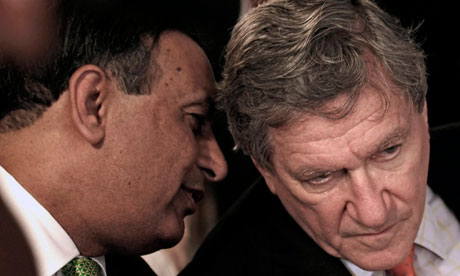
Husain Haqqani offers to resign

Husain Haqqani offers to resign
high-profile ambassador to Washington has offered to resign, amid claims that he crafted an offer to US officials to rein in the Pakistani military and intelligence agency in the wake of Osama bin Laden's death.
In a tale of intrigue once again pitting Pakistan's weak civilian government against the military, an urgent letter was supposedly delivered in May to the then US military chief, Admiral Mike Mullen, from President Asif Ali Zardari, asking for help as he feared a coup after the US raid that killed the al-Qaida chief on 2 May.
Husain Haqqani, the US ambassador known for being an effective operator in Washington, warned on Thursday that the furore surrounding the letter was being exploited by the opponents of democracy in Pakistan. But he told the Guardian he had offered to resign in order to put an end to the controversy.
The prime minister, Yousuf Raza Gilani, told parliament this week that the ambassador had been recalled to Islamabad "to explain his position". Pakistan has been ruled by the military for half its existence and the elected government remains fragile. Some see the letter as a smear campaign by elements associated with the military.
A US-based Pakistani businessman, Mansoor Ijaz, had claimed that he delivered the missive, revealing its contents in an article in the Financial Times last month. He said that he had been asked to do so by a "senior Pakistani diplomat", which seemed to point strongly at Haqqani, a close aide of Zardari.
A spokesman for Mullen, who has just retired as chairman of the joint chiefs of staff, had this week confirmed a letter was received but added that Mullen "did not find it at all credible and took no note of it then or later".
Haqqani told the Guardian that he did not write or deliver the memo, but he said he offered to face an inquiry in order to put an end to the matter. "I do not want this non-issue of an insignificant memo written by a private individual and not considered credible by its lone recipient to undermine democracy," he said.
Pakistan's opposition has seized on the story. But, so far, there is no evidence that Zardari or his representatives authored the letter.
In the letter, Zardari offered to disband the notorious section S of Pakistan's Inter-Services Intelligence (ISI) spy agency in return for American support, according to Ijaz. This section is in charge of Afghan operations, including dealings with the Taliban and other Islamic militants.
US officials have repeatedly accused the ISI of secretly backing the Taliban and other insurgents, in Afghanistan.
Anti-Americanism in Pakistan reached new levels after a US special forces squad unilaterally entered the country to find and kill Bin Laden. The operation deeply embarrassed Pakistan's military, which condemned the operation as a breach of its territorial sovereignty.
Any suggestion that Zardari reached out to Washington, against Pakistan's own armed forces, is very wounding for his government.
Those close to Zardari believe the letter is being used to drive a wedge between the civilians and the military.
Many Pakistanis believe that the Zardari government, and the regime of General Pervez Musharraf before it, sold out its own interests to join Washington's "war on terror".
Such anti-American feeling is perhaps most acute in the military itself, which views Haqqani's access to the corridors of power in Washington with deep suspicion.
Given Haqqani's connections in Washington, it is unclear why he would choose Ijaz to deliver a message. Zardari's spokesman has accused Ijaz, who says he negotiated between the government of Sudan and the Clinton administration in the 1990s, of being a fantasist.
Husain Haqqani offers to resign

Husain Haqqani

Husain Haqqani
Husain Haqqani
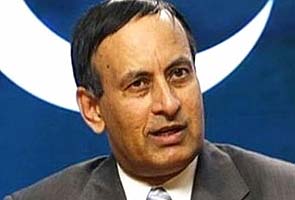
Husain Haqqani is Pakistan's Ambassador to the United States in Washington, DC.A trusted advisor of late Pakistani Prime Minister, Ms. Benazir Bhutto, Ambassador Haqqani is known as a Professor at Boston University and Co-Chair of the Hudson Institute's Project on the Future of the Muslim World as well as editor of the journal ‘Current Trends in Islamist Thought' published from Washington DC.
Haqqani came to the U.S. in 2002 as a Visiting Scholar at the Carnegie Endowment for International Peace in Washington DC and an adjunct Professor at the School of Advanced International Studies (SAIS) at Johns Hopkins University. He is a leading journalist, diplomat, and former advisor to Pakistani Prime ministers. His syndicated column is published in several newspapers in South Asia and the Middle East, including Oman Tribune, Jang, The Indian Express, Gulf News and The Nation (Pakistan).
 Husain Haqqani with Hallbroke
Husain Haqqani

Husain Haqqani

Hussain Haqqani Arriving Pakistan

Hussain Haqqani Arriving Pakistan
The embattled Pakistan Ambassador to the US Husain Haqqani has left for Islamabad from Dalas airport, Washington and he is expected to arrive here by Sunday morning, Geo News reported.

How many people will be doomed by the storm triggered by memo sent to former US joint chiefs of staff chairman Mike Mullen is a question filling everybody's mind at the moment.

Pakistan Muslim League-N President Nawaz Sharif on Saturday called for constitution of a commission to probe the secret memo and warned to go to the Supreme Court in case the government failed to do so.

Former advisor National Security Council (NSC) Lt. Gen. (Retd) Mehmood Durrani Saturday termed everything linked to him in Mansoor Ijaz's memo as 'lunacy'.

Talking to Geo News, Durrani clarified that neither did he have any knowledge of the aforementioned memo nor was he consulted in writing its content.

Former army chief General (Retd) Jehangir Karamat also expressed his ignorance regarding the existence of any such memorandum.

Interior Minister Rehman Malik said that Pakistan's ambassador to Washington, Hussain Haqqani, did not write a letter seeking US help against the country's powerful military.

However, he was involved in communication via text message with an American national, Rehman Malik said.

He said the evidence available was "an exchange of SMS messages and Blackberry messages" and added: "Now we have to see that who initiated these."

Prime Minister Yusuf Raza Gilani said Hussain Haqqani had been recalled and that he would soon reach in Islamabad.

Any decision before listening to him would be a mistake, the Prime Minister asserted.

On the other hand, Mansoor Ijaz has provided fresh evidence regarding the Mike Mullen memo. The new evidence also includes proof of his communication with Hussain Haqqani.